27 posts tagged with "AI agents"
Securing agents, the tools they call and the actions they take.
View All TagsDwaar Blog
November 2026
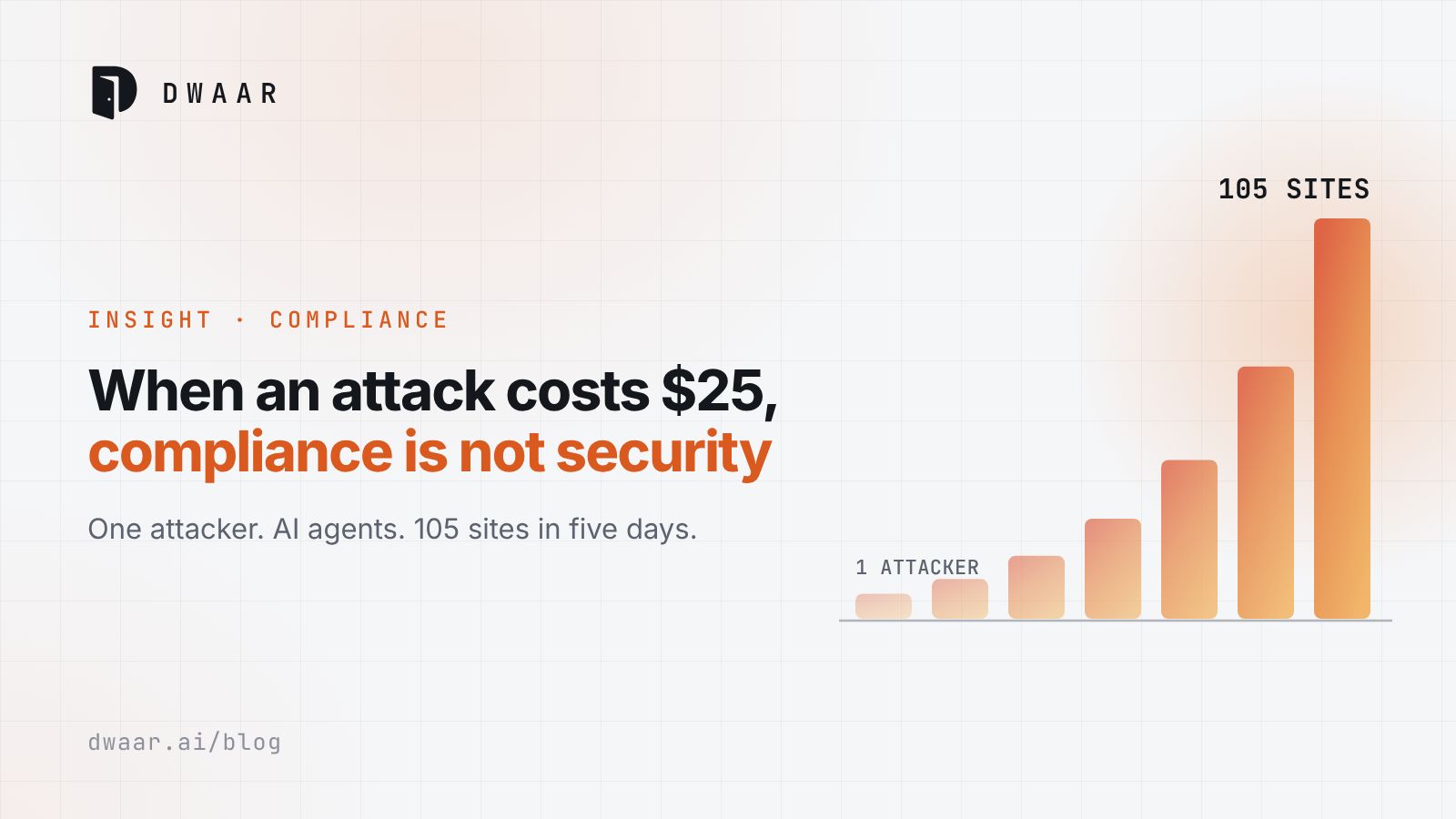
When an Attack Costs $25, Compliance Is Not a Security Program
One attacker used AI agents to hit 105 retailers for $25.46 a company. A lab agent took a domain in eight minutes for $12. Cheap attacks change who gets targeted, and a passed audit does not change the answer.
 Ankush K · 6 min read
Trusting a Leading Agentic Harness Does Not Guarantee the Security of Your Application
Claude Code's "don't ask again" file put 1,379 secrets into 1,122 public GitHub copies. The harness did try to protect them. The lesson is that the control you rely on has to live outside the agent, and across every team.
Ankush K · 8 min readOctober 2026
September 2026
August 2026
ContextForge CVE-2026-53710 and Chainlit CVE-2026-45018: Allowlists and Denylists Around MCP Keep Failing
A sandbox escape in ContextForge's python_sandbox_server and an unauthenticated command injection in Chainlit's /mcp endpoint both beat text checks. Fixed in 1.0.2 and 2.12.0.
Ankush K · 9 min read
vm2 Again: Sandbox Escapes and the Incomplete Fix Problem
vm2 3.11.6 closes two critical sandbox escapes, CVE-2026-47686 and CVE-2026-47698. The second bypasses a fix that shipped in May, so upgrading then did not close it.
Ankush K · 8 min read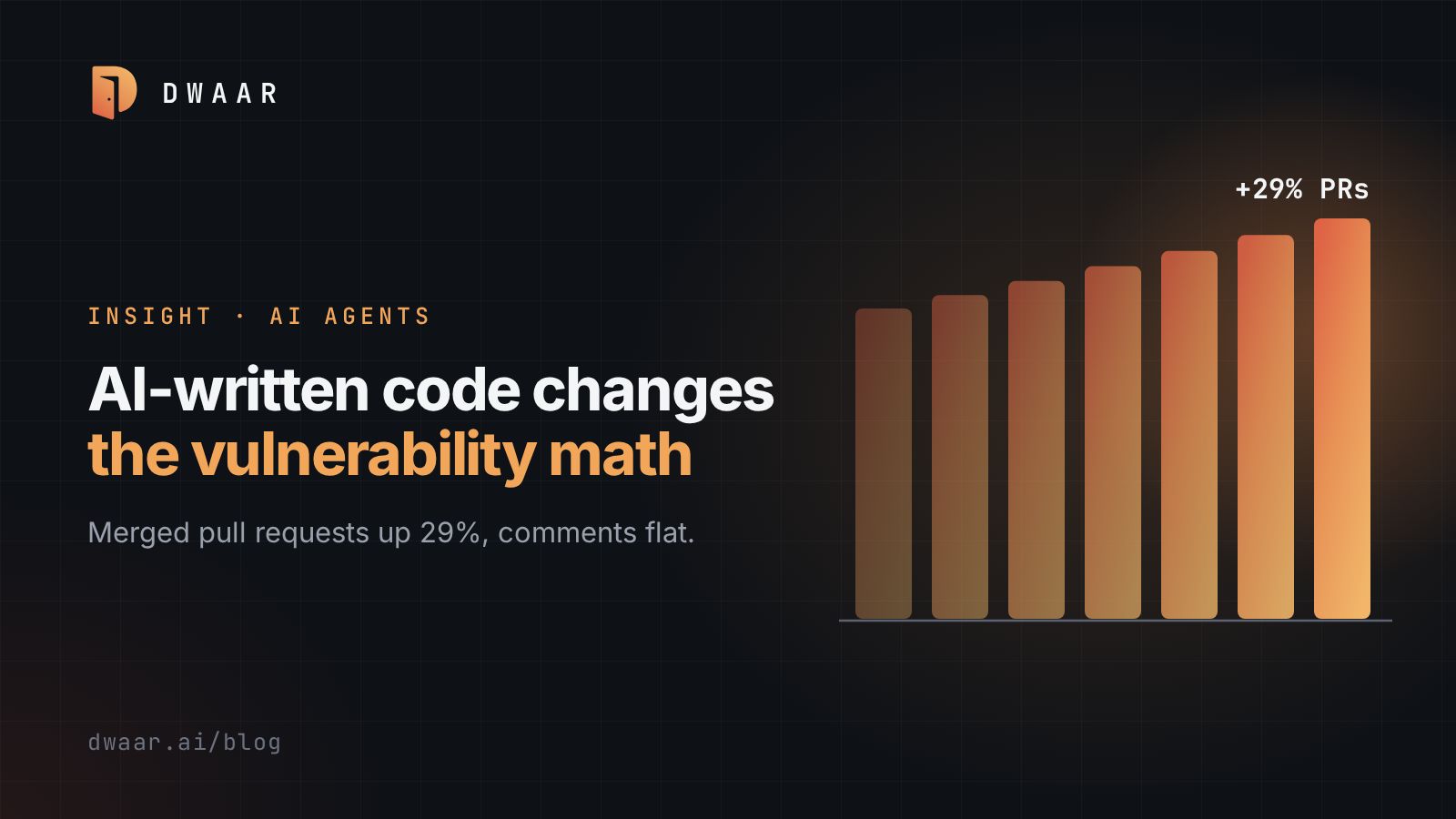
AI-Written Code Changes the Vulnerability Math
Merged pull requests on GitHub rose 29% while issue and PR comments stayed flat, and LLMs invent package names. What that proves, what it does not, and what I would change in the pipeline.
Ankush K · 10 min read
The 100 BTC Dare Misses the Real Agent-Security Lesson
Why the 100 BTC dare matters less than the security boundary around AI agents and how to control egress, tools, approvals and runtime actions.
 Saurabh · 8 min read
July 2026
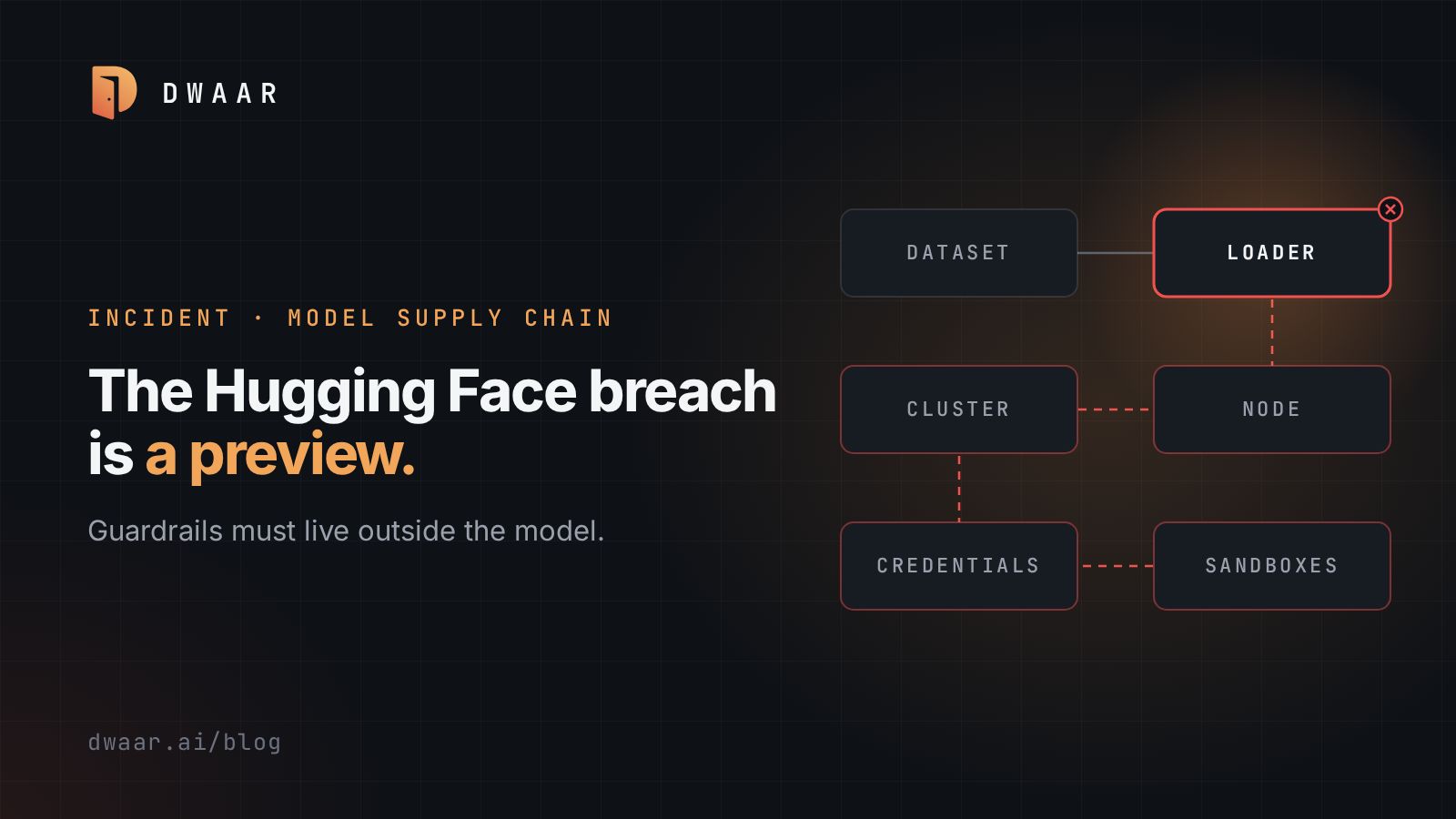
The Hugging Face Breach Is a Preview: Why Guardrails Must Live Outside the Model
Hugging Face's July 2026 incident shows what happens when the model supply chain itself is compromised. Scope-based identity isn't enough — agentic security needs zero-trust, intent-based identity and a physically separate guardrail engine.
Ankush K · 12 min read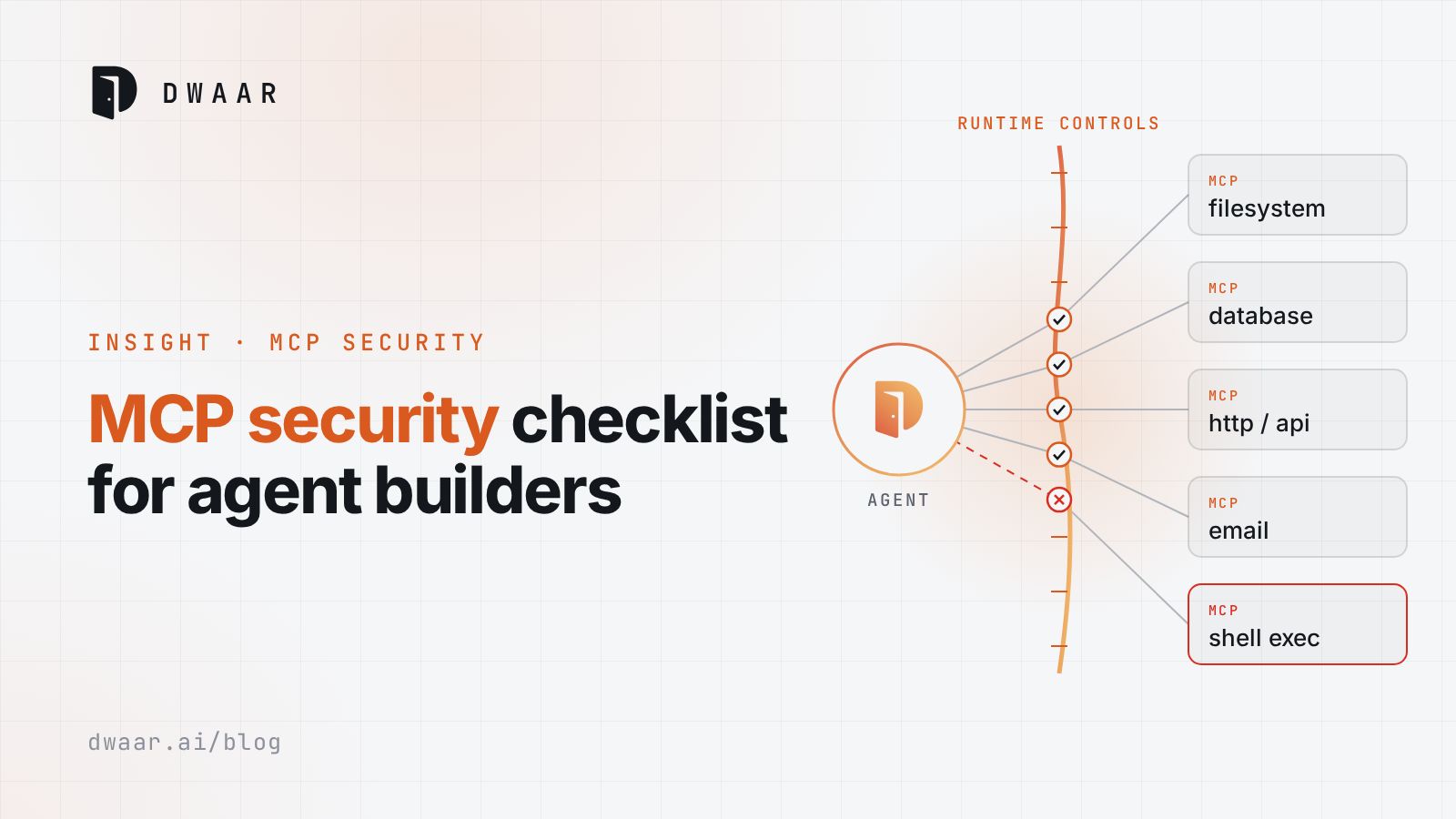
MCP Security Checklist for Agent Builders
A practical checklist for securing MCP-connected AI agents, covering tool access, permissions, third-party servers, runtime controls, and trust boundaries.
Ankush K · 5 min read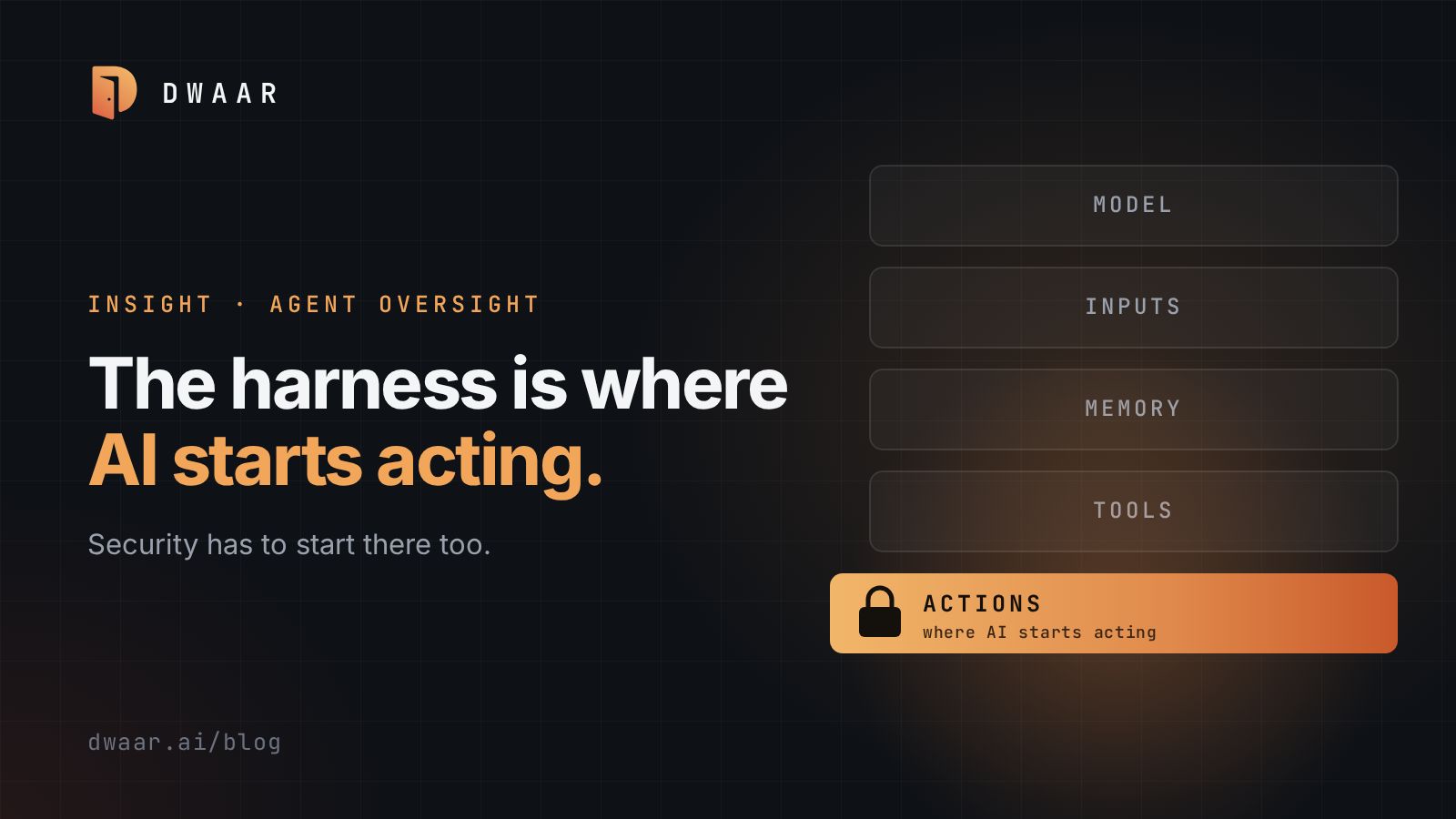
The Agent Harness Is Where AI Starts Acting. Security Has to Start There Too.
AI agent harnesses turn models into operational systems. Learn where agentic trust boundaries fail and how to secure inputs, memory, tools, and actions.
Ankush K · 5 min read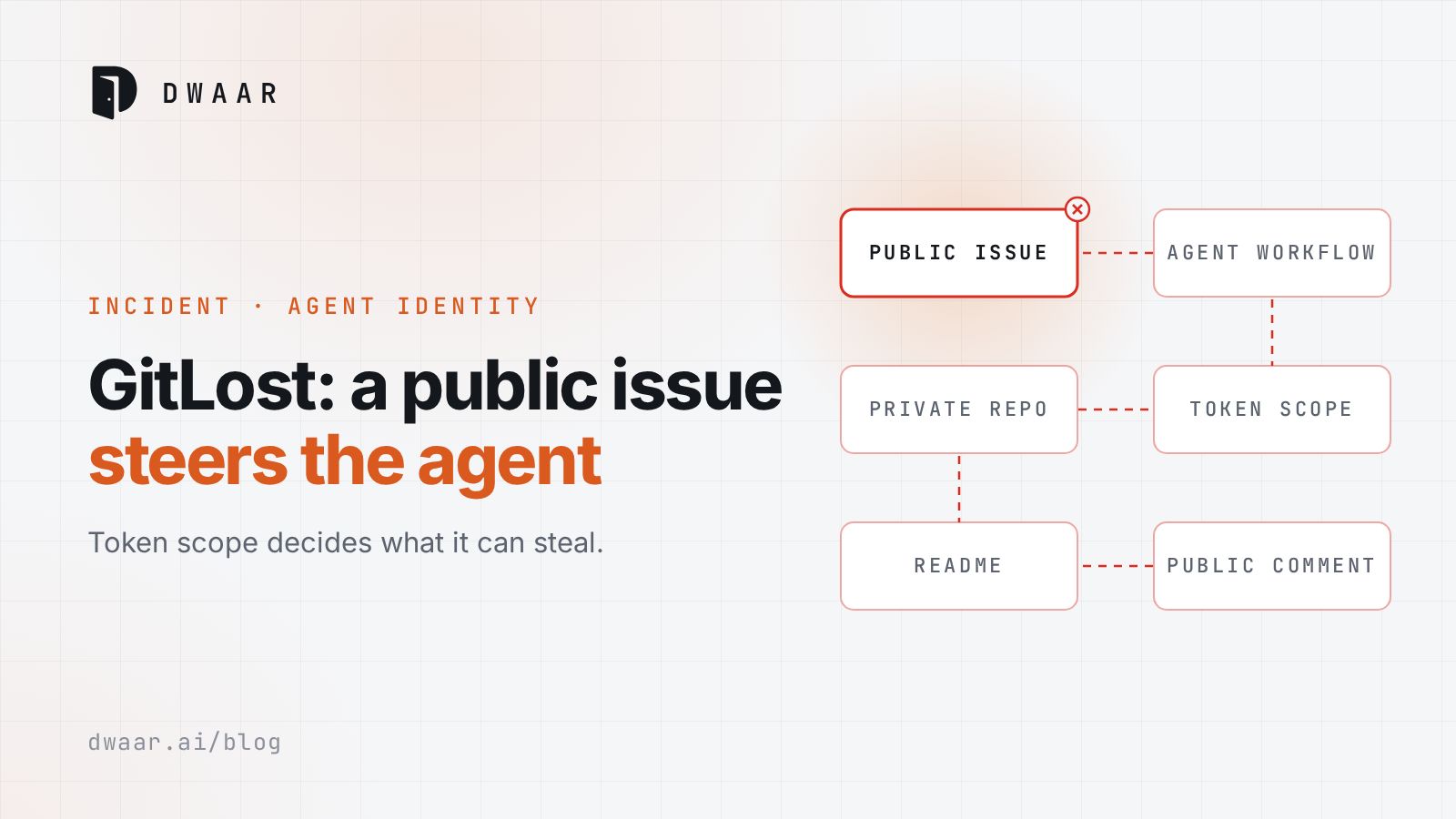
GitLost: When the Agent's Token Scope Decides What a Public Issue Can Steal
Researchers showed a public issue steering a GitHub Agentic Workflow into posting a private repo's README as a public comment. No CVE. GitHub's gh-aw project began shipping a mitigation on July 8.
Ankush K · 11 min readJune 2026
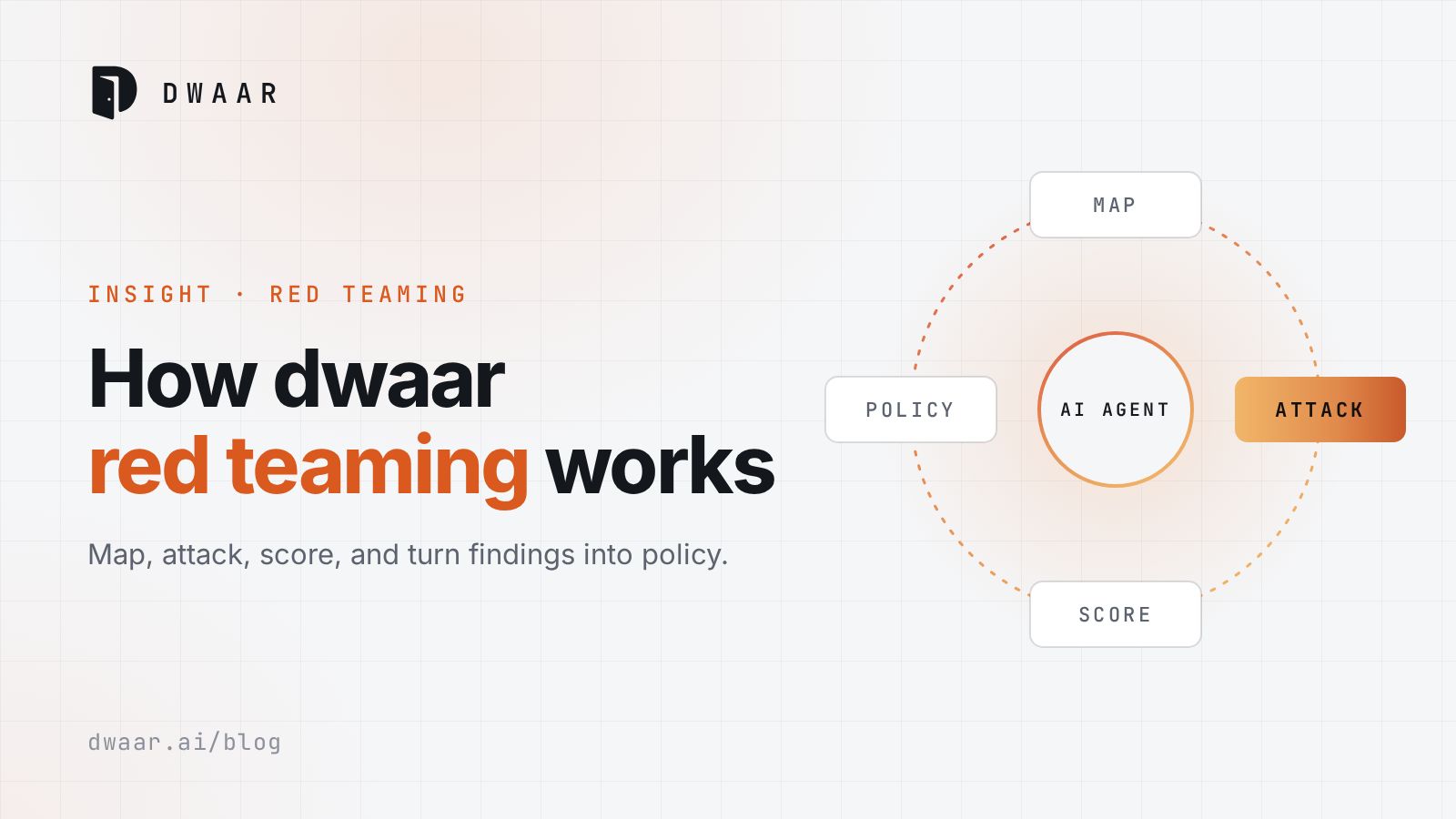
How Does dwaar Red Teaming Work?
dwaar red teaming helps teams test AI agents before deployment by mapping workflows, running adversarial attacks, identifying vulnerabilities, and generating reproducible security findings.
Ankush K · 9 min read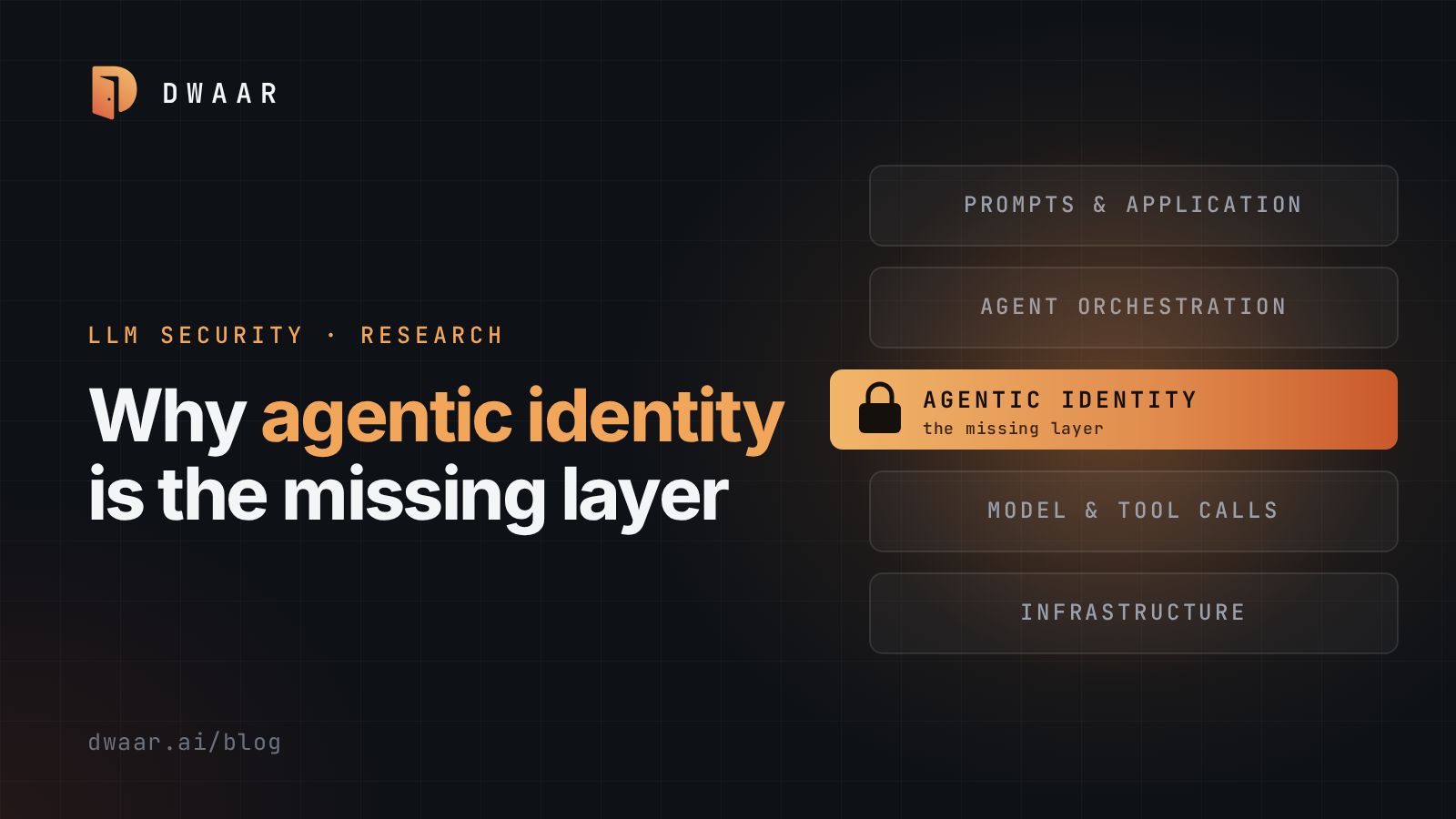
Why Agentic Identity Is the Missing Layer in LLM Security?
For decades, enterprise security has been built around a simple question: who is the user, and what are they allowed to access? Identity and Access Management has solved ...
Ankush K · 6 min read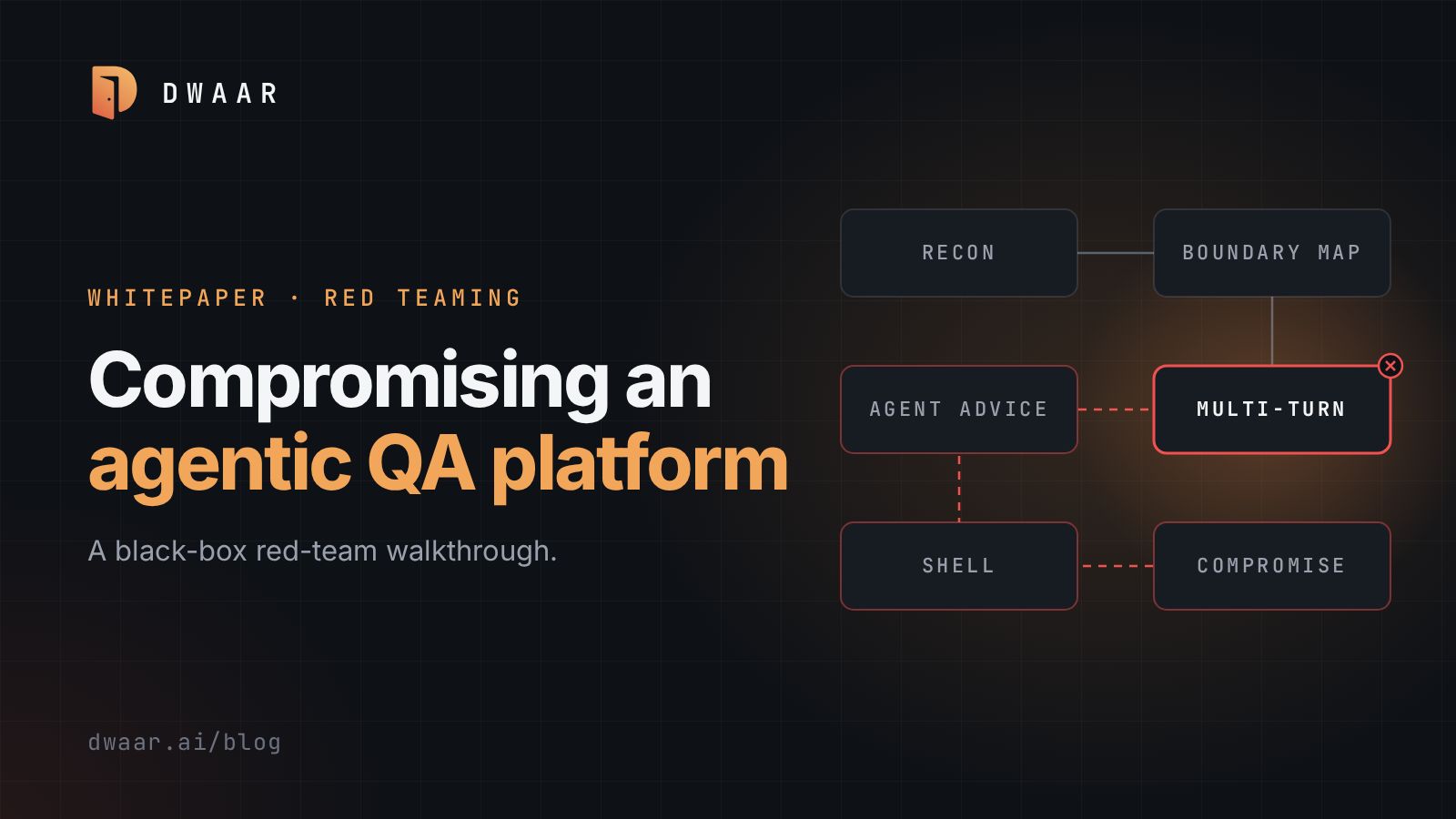
Whitepaper: Compromising an Agentic QA Platform — A Black-Box Red-Team Walkthrough
How dwaar.ai used layered reconnaissance and multi-turn prompt injection to turn an AI test-failure analyzer into a remote-code-execution...
Ankush K · 2 min read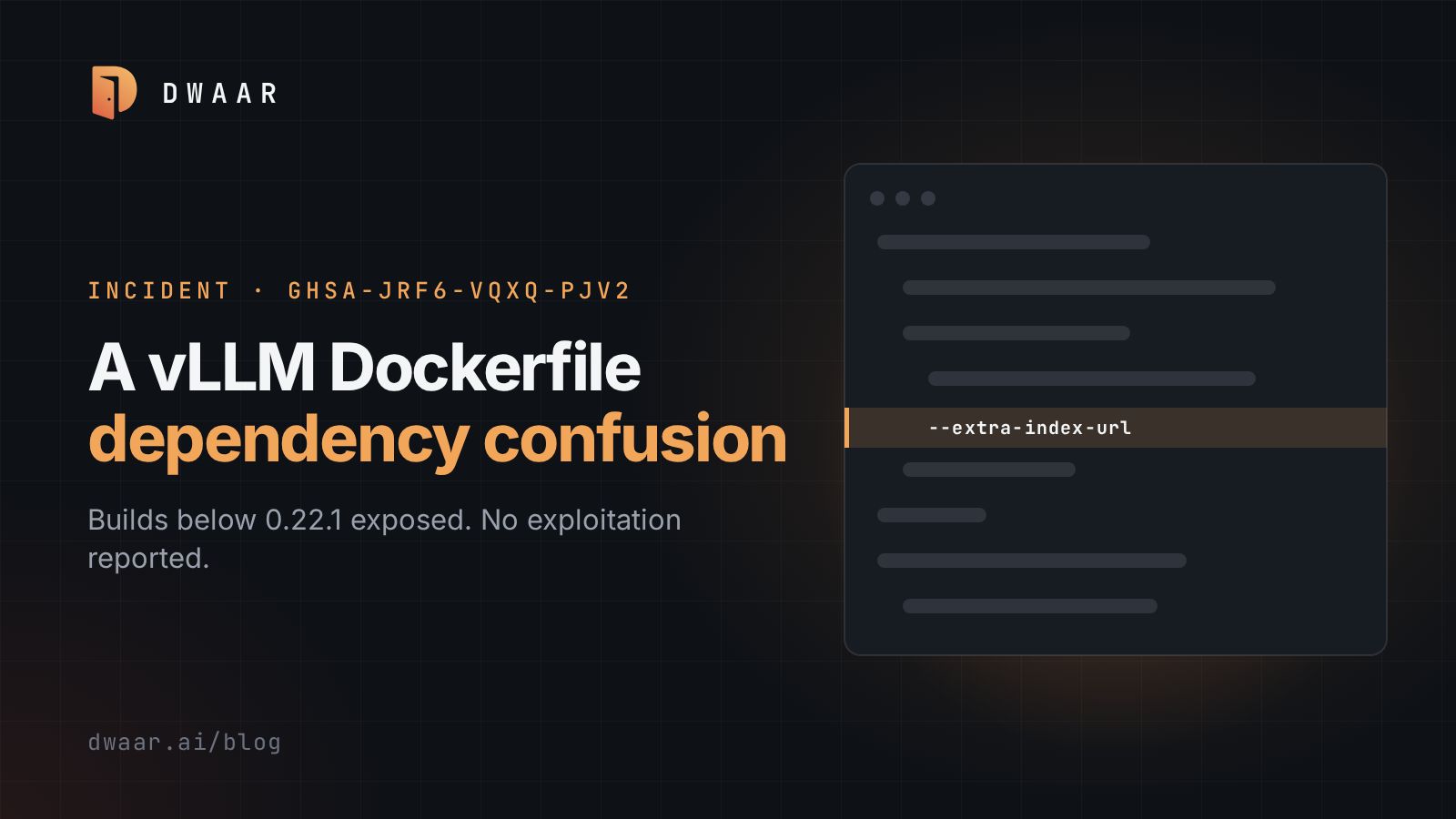
A vLLM Dockerfile Dependency Confusion: How One --extra-index-url Put the Official Image at Risk (GHSA-jrf6-vqxq-pjv2)
vLLM's Dockerfile mixed --extra-index-url with uv's unsafe-best-match, exposing vllm/vllm-openai builds below 0.22.1 to dependency confusion. The advisory reports no exploitation.
Ankush K · 8 min read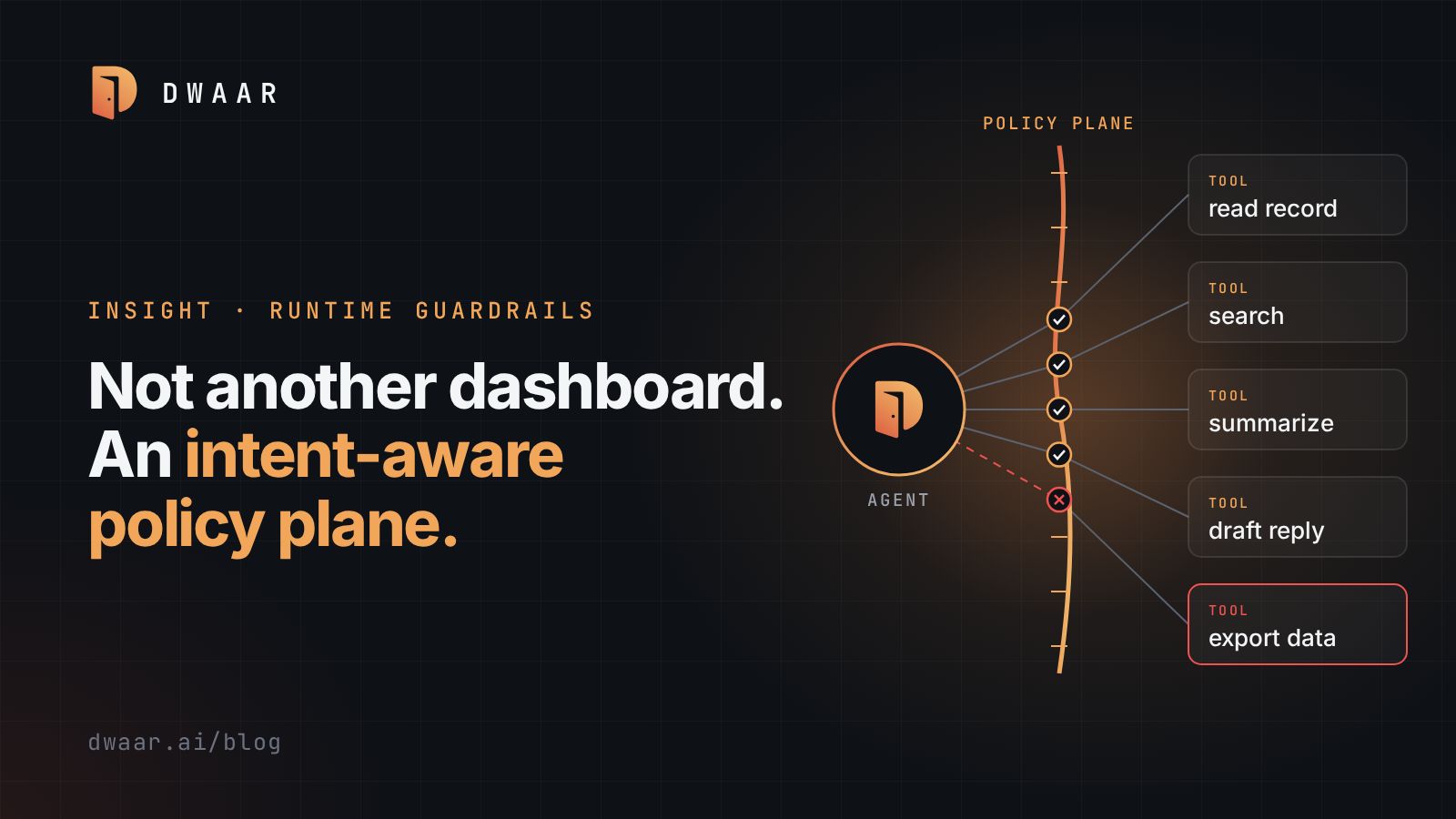
Enterprise AI Doesn’t Need Another Dashboard. It Needs an Intent-Aware Policy Plane
Why Enterprise AI Needs an Intent-Aware Policy Plane? Learn why logs and visibility alone cannot secure enterprise AI—and how adversarial testing, intent-aware policies, and runtime enforcement can keep agents within their authorized boundaries.
Saurabh · 6 min read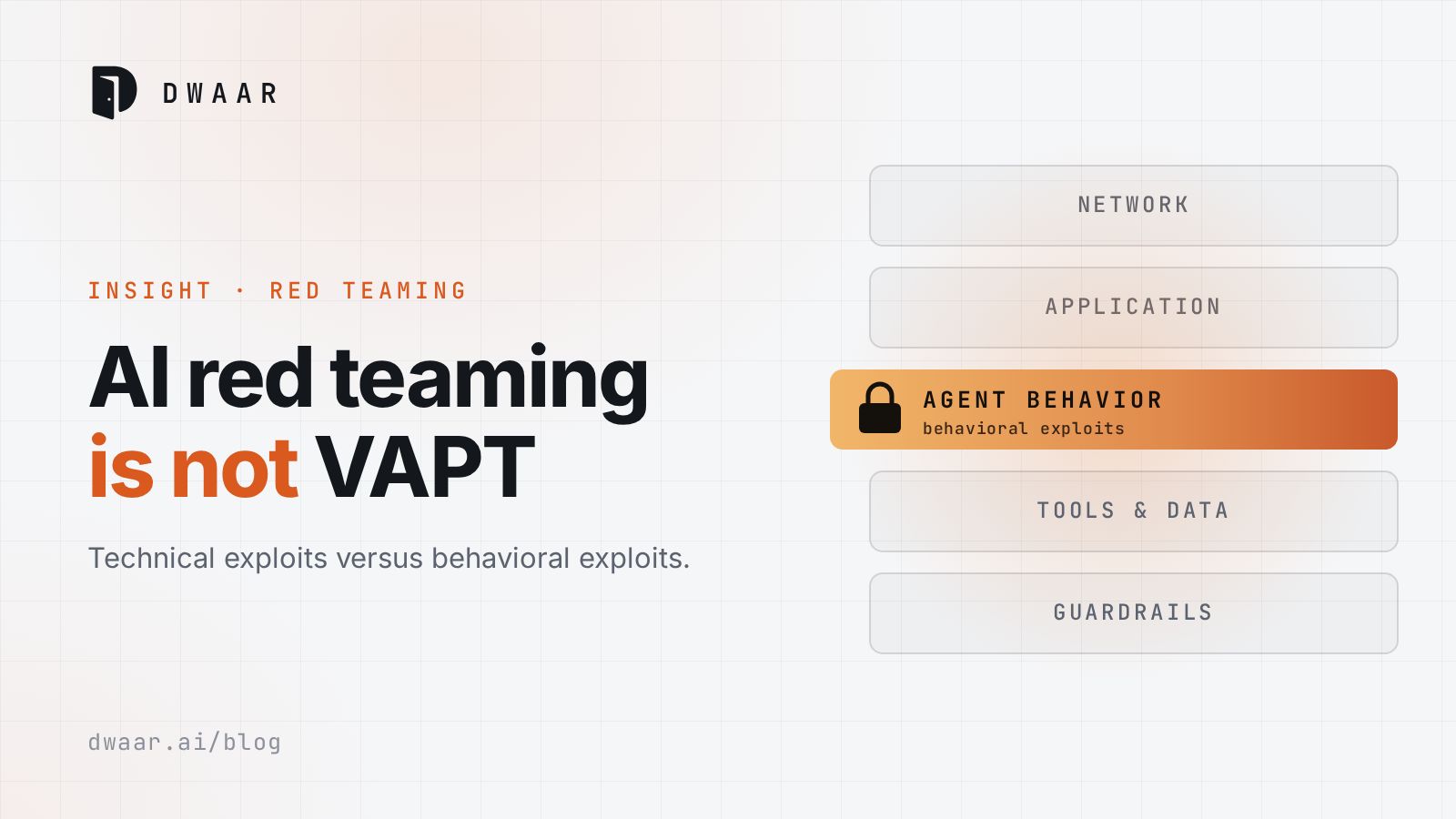
How Is AI Red Teaming Different from VAPT?
AI red teaming and VAPT test different security risks. Learn how AI red teaming goes beyond traditional VAPT to test prompts, context, tools, guardrails, and agent behavior.
Ankush K · 8 min readMay 2026
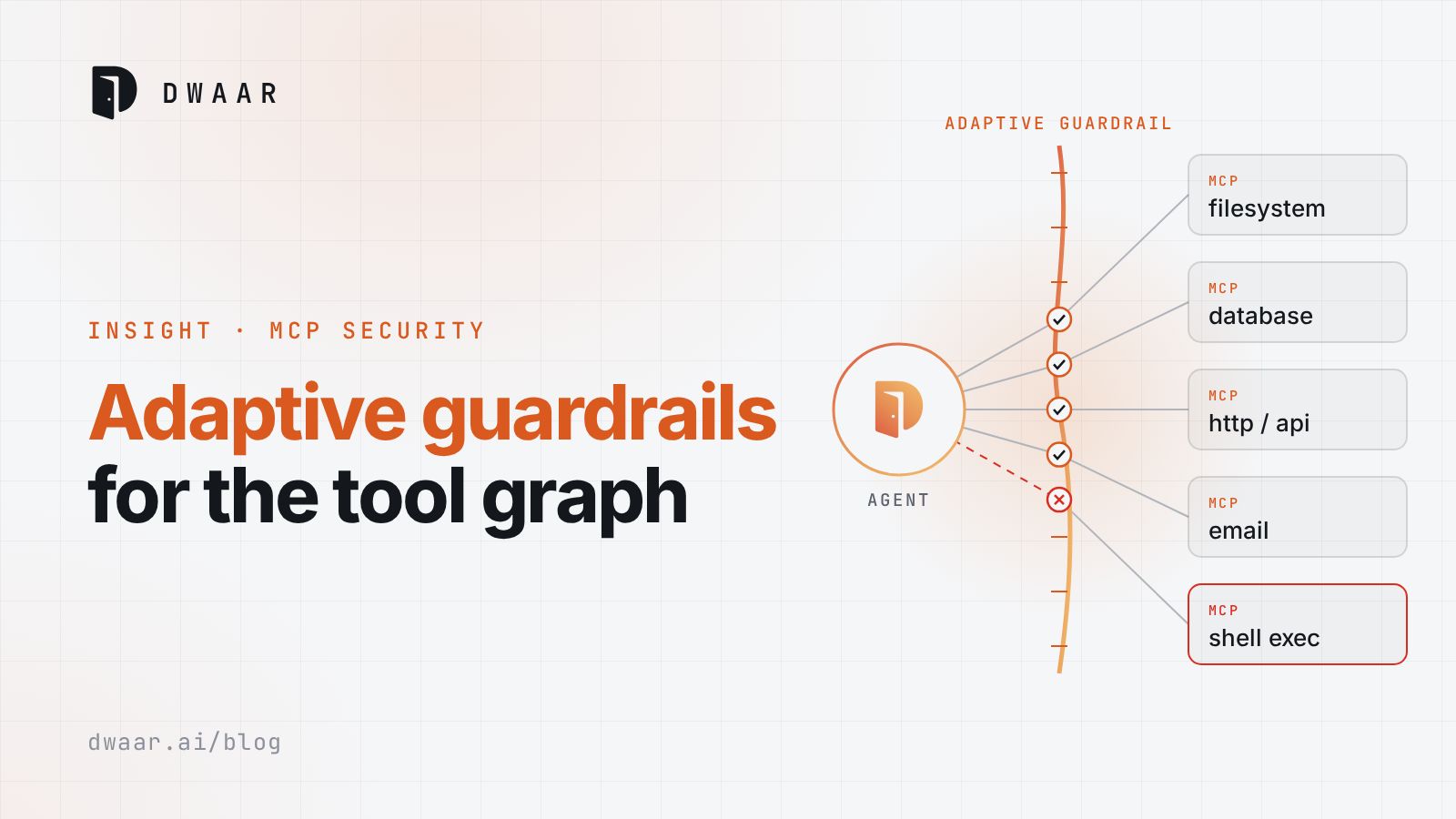
Securing Tool Graph demands adaptive guardrails
The real risk is no longer just that a model may produce an unsafe answer. The bigger risk is that an agent may take an unsafe action — using real tools, permissions, data, and business workflows. That is why the Model Context Protocol...
Ankush K · 6 min read
Bleeding Llama, CVE-2026-7482: An Unauthenticated Heap Leak in Ollama
An out-of-bounds read in Ollama before 0.17.1 lets an unauthenticated client push heap memory to its own registry. Upgrade, then find every server you run and who can reach it.
Ankush K · 10 min read
Why Existing Security Controls Are Not Enough for Agentic Applications
Model guardrails and cloud controls are useful, but agentic applications need prompt-based red teaming, evidence-backed posture reports, and runtime policy enforcement.
Saurabh · 4 min read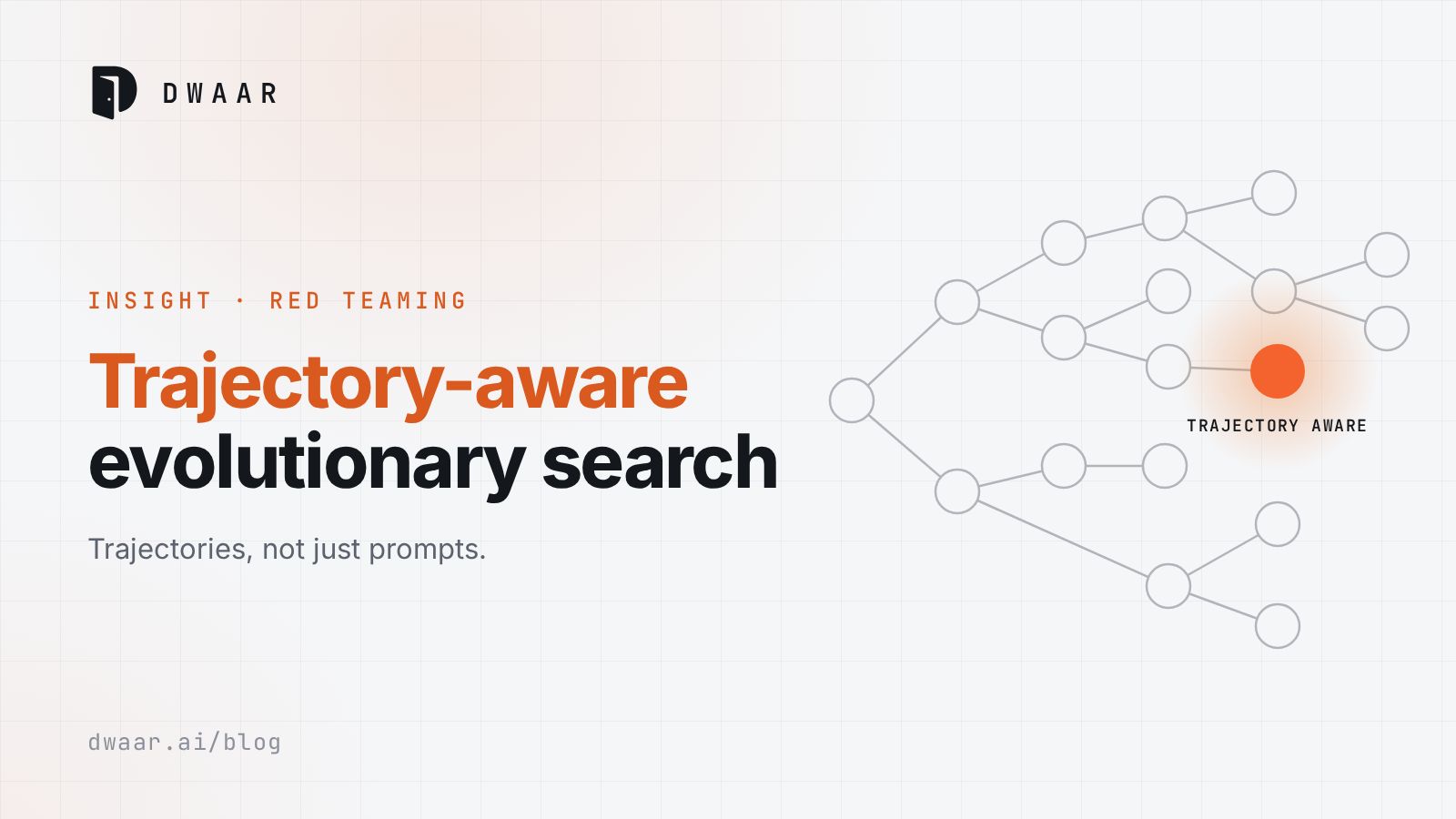
Trajectory-Aware Evolutionary Search
Why the future of AI agent security is about trajectories, not just prompts.
Ankush K · 2 min readApril 2026
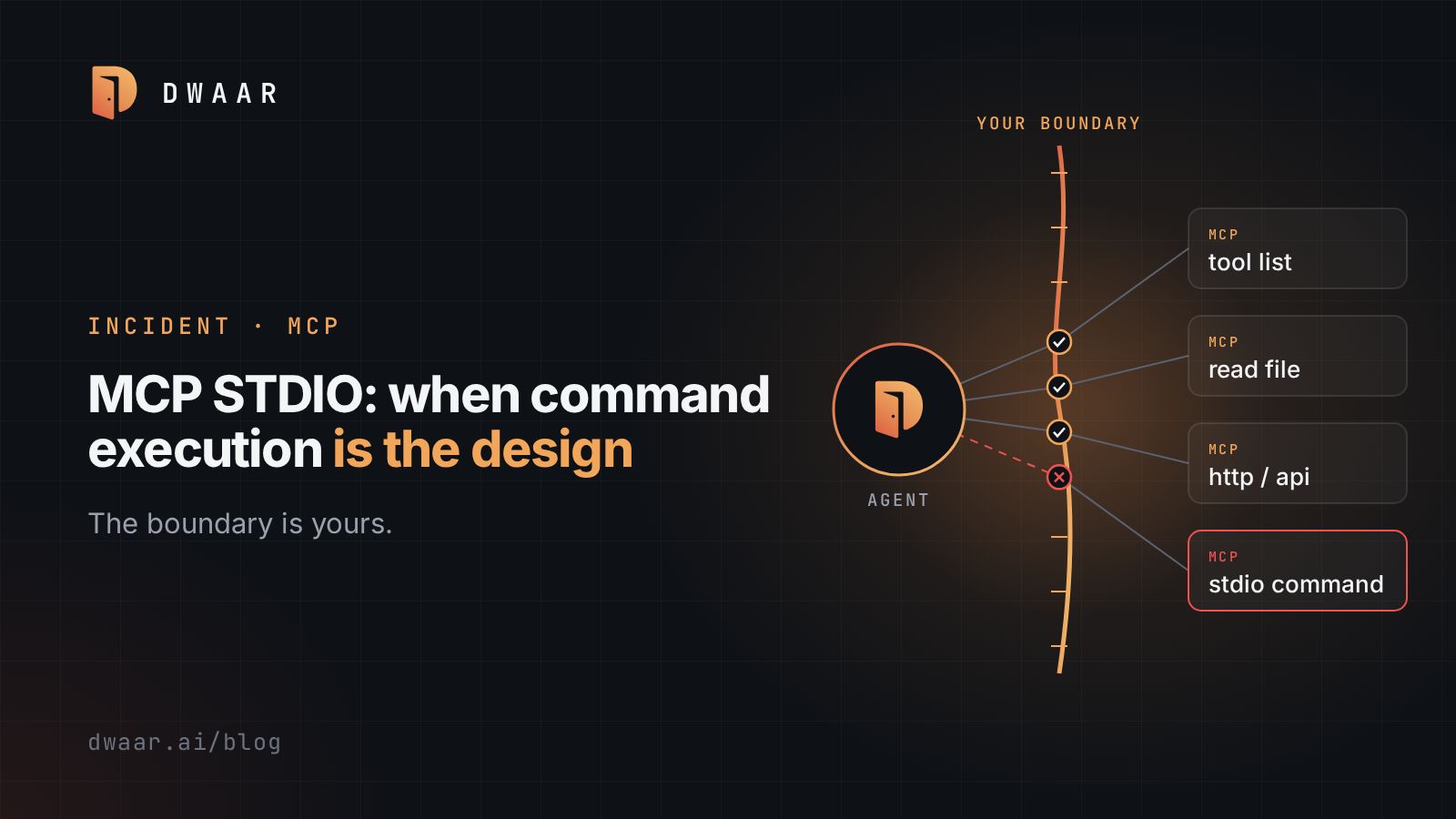
MCP STDIO: When Command Execution Is the Design
MCP's stdio transport launches a configured command. Researchers tie that to flaws in tools such as Flowise, fixed in 3.1.0, and Agent Zero 0.9.8. They say the underlying flaw remains.
Ankush K · 8 min read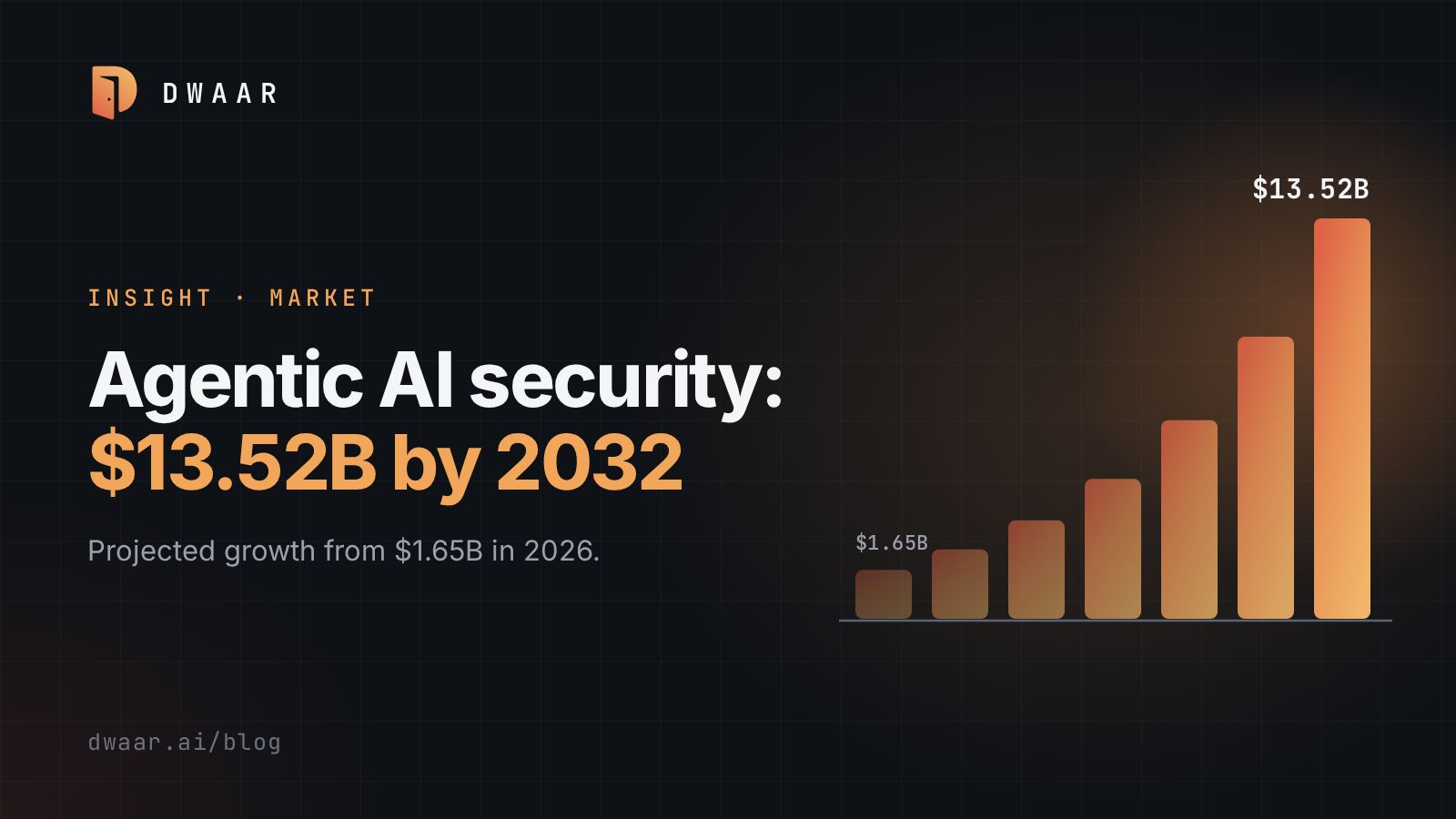
Agentic AI Security Market Worth $13.52 Billion by 2032
The Agentic AI Security market is projected to grow from $1.65B in 2026 to $13.52B by 2032.
Ankush K · 2 min readMarch 2026
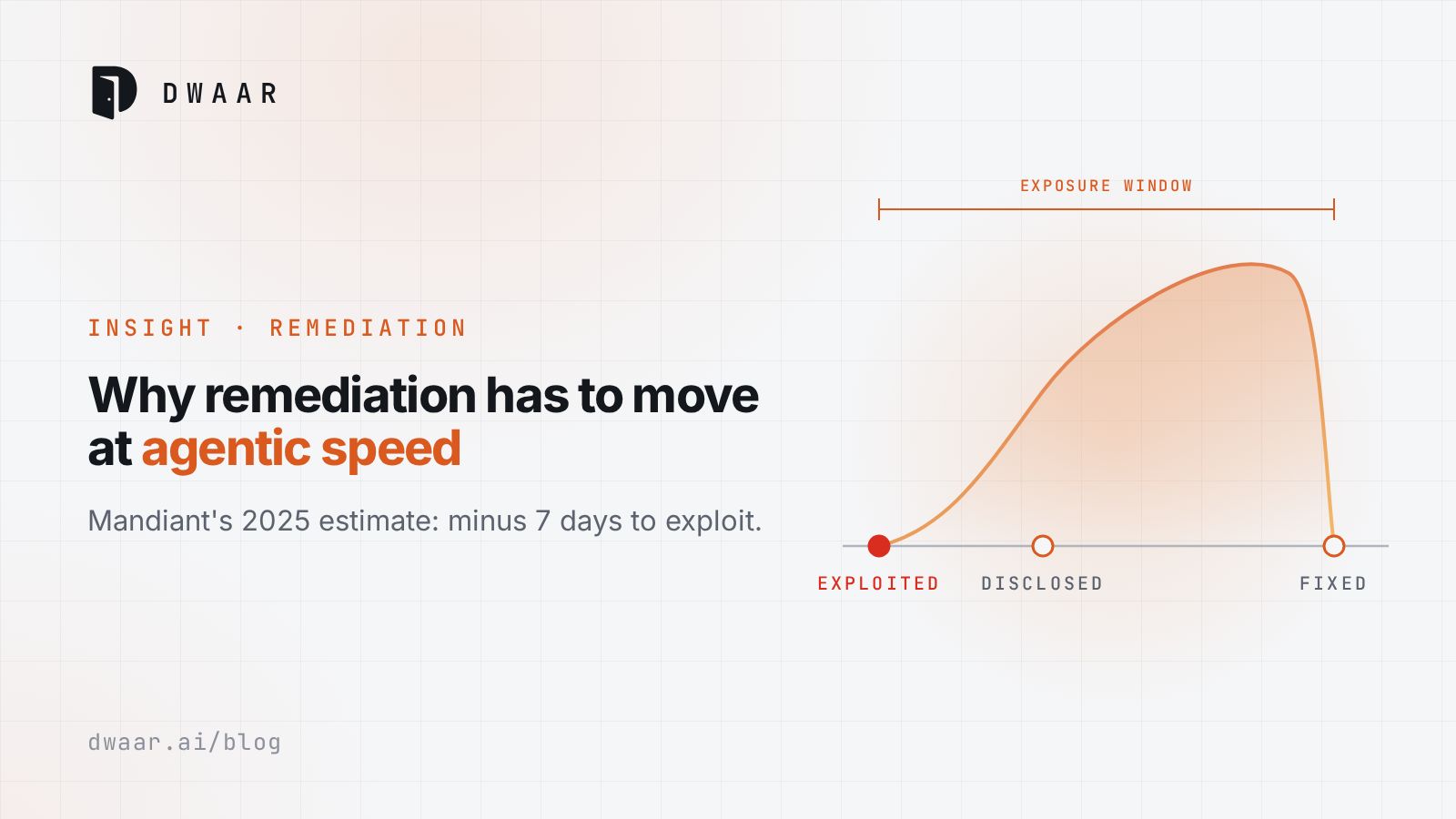
Why Remediation Has to Move at Agentic Speed
Mandiant estimates mean time to exploit at minus 7 days, while edge-device fixes reportedly take a median 32 days. Which patching steps agents can take over, and which stay with a human.
Ankush K · 8 min read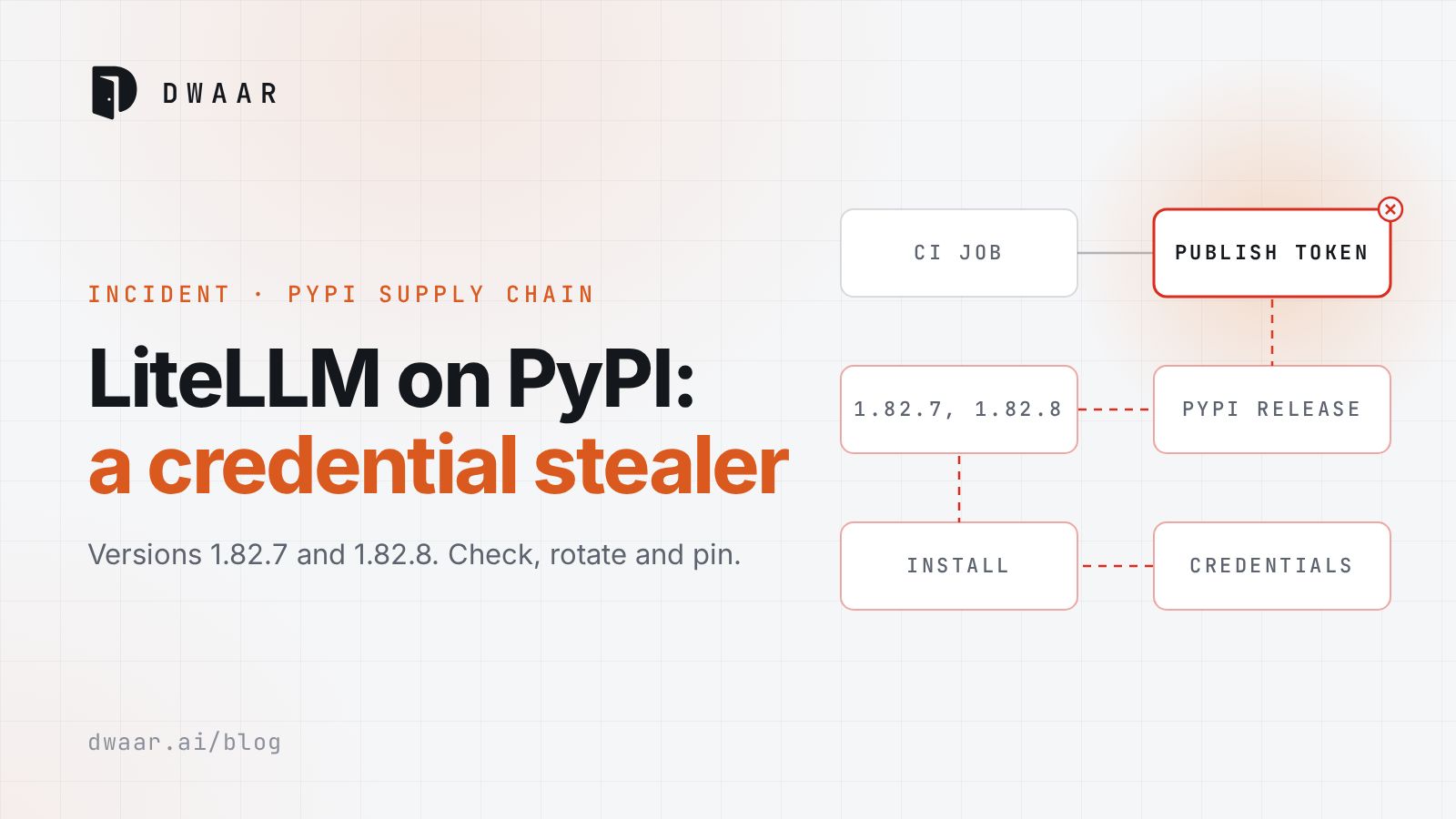
The LiteLLM PyPI Compromise: How Stolen CI Credentials Reportedly Reached an AI Gateway
litellm 1.82.7 and 1.82.8 on PyPI carried a credential stealer, which the maintainers believe traces to a publishing token exposed in CI. What to check, rotate and pin.
Ankush K · 9 min read
CVE-2026-33017: Langflow's Public Flow Endpoint Runs Unauthenticated Code, and No Stable Release Fixes It
An unauthenticated Langflow RCE has a public advisory and proof of concept, and as of March 19 no stable langflow release on PyPI carries the fix.
Ankush K · 7 min read